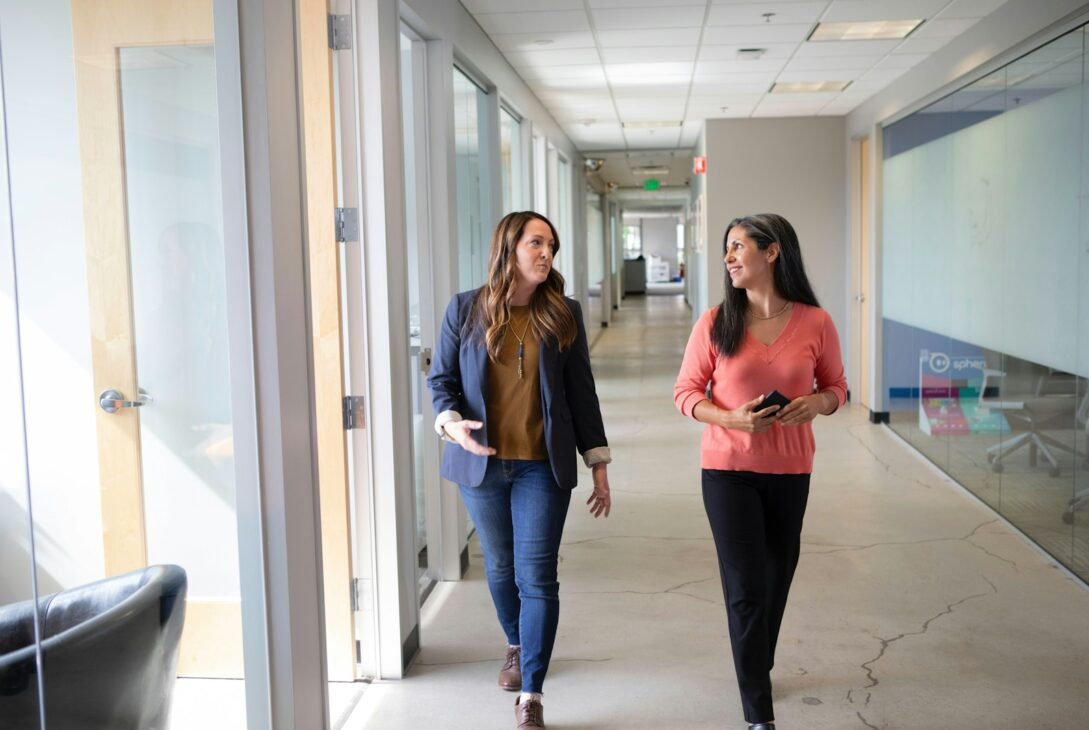
Phone calls and meetings trap you in chairs for hours daily. Walking meetings transform sedentary conversations into active movement sessions.
This approach eliminates sitting time without sacrificing productivity. Moreover, movement often improves conversation quality through increased blood flow and reduced formality.
1. Why Sitting Meetings Harm You
Extended sitting damages health even when you exercise regularly. Your body needs movement distributed throughout the day, not concentrated in gym sessions.
Additionally, sitting creates mental stagnation. Physical stillness often produces intellectual rigidity making problem-solving harder.
Conference rooms feel formal and hierarchical. This environment inhibits open conversation and creative thinking that many discussions require.
Research from Stanford University found that walking meetings generate 60% more creative ideas than seated conversations while maintaining equal task completion rates.
2. Understanding Walking Meeting Benefits
Walking increases blood flow to the brain improving cognitive function. This enhanced mental clarity benefits complex discussions and decision-making.
Movement reduces meeting formality naturally. Side-by-side walking feels more collaborative than face-to-face confrontation across tables.
Walking meetings have natural time limits. The physical activity creates endpoints preventing meetings from expanding endlessly.
Fresh air and changing scenery stimulate thinking. Novel environments trigger different thought patterns than familiar conference rooms.
3. Identifying Walking-Appropriate Meetings
Not every conversation suits walking. Strategic selection ensures walking meetings succeed rather than frustrate.
Ideal walking meetings:
- One-on-one conversations
- Brainstorming sessions
- Casual check-ins and updates
- Coaching or mentoring discussions
- Problem-solving conversations
- Relationship-building talks
Avoid walking for meetings requiring visual materials, detailed note-taking, or more than three participants.
4. Phone Call Walking Protocol
Phone calls provide perfect walking opportunities. Any call lasting 10+ minutes justifies getting outdoors.
Use wireless headphones freeing your hands and improving audio quality. Corded headphones restrict movement while speakerphone creates background noise issues.
Establish a regular walking route for calls. Familiar paths let you focus on conversation without navigation concerns.
Notify the caller you’re walking. This manages expectations about brief pauses for street crossings or obstacles.
| Call Type | Walking Suitability | Ideal Duration | Best Location |
|---|---|---|---|
| Casual check-ins | Excellent | 10-30 minutes | Parks, neighborhoods |
| Client calls | Good | 20-45 minutes | Quiet areas, predictable routes |
| Deep work discussions | Excellent | 30-60 minutes | Nature trails, low-traffic areas |
| Conference calls | Poor | Any | Stay seated for multi-person dynamics |
| Video calls | Not suitable | Any | Requires stationary camera position |
Matching call types to walking appropriateness maximizes the practice’s effectiveness.
5. Scheduling Walking Meetings
Block calendar time specifically for walking meetings. Vague intentions rarely happen while scheduled appointments do.
Choose times when weather is typically favorable. Early morning or late afternoon often provide pleasant walking conditions.
Allow 10 minutes more than seated meetings would take. Walking pace slows conversation slightly while setup time adds minutes.
Schedule back-to-back walking meetings cautiously. Physical fatigue from continuous walking might degrade later meeting quality.
Consequently, communicate the walking format when scheduling. Participants need to dress appropriately and arrive ready to walk.
6. Route Selection Strategy
Choose routes matching meeting length and complexity. Short updates need different paths than lengthy strategy sessions.
Familiar routes work best for complex discussions. Navigation decisions distract from conversation when you’re exploring new areas.
Select quiet routes minimizing traffic and crowds. Constant interruptions from noise or people disrupt meeting flow.
Include some nature when possible. Green spaces provide cognitive benefits beyond simple outdoor exposure.
Loop routes returning to starting points work better than out-and-back paths. Psychological momentum feels different walking loops versus reversing direction.
7. Weather Adaptation Techniques
Weather doesn’t eliminate walking meetings—it requires adaptation. Strategic preparation handles most conditions.
Rain calls for covered walking routes. Mall interiors, covered walkways, or parking structures provide weather protection.
Extreme heat suggests early morning or evening meetings. Timing adjustment solves most temperature challenges.
Cold weather demands appropriate clothing. Dress in layers allowing adjustment as body temperature rises during movement.
However, dangerous conditions justify postponement. Ice, severe storms, or extreme temperatures reasonably move meetings indoors.
8. Technology and Documentation
Walking meetings need different documentation approaches than seated ones. Strategic tools capture information without disrupting flow.
Use voice recording apps for detailed discussions. Recording lets you focus on conversation rather than note-taking.
Take brief voice notes during walks. Quick recorded reminders capture key points for later expansion.
Send follow-up emails immediately after walking meetings. Fresh memory produces more complete recaps than delayed documentation.
Consider having one participant stay seated taking notes. This works for three-person meetings maintaining documentation quality.
9. Managing Meeting Dynamics While Walking
Walking changes interaction patterns. Understanding these shifts helps you facilitate productive conversations.
Side-by-side walking reduces intimidation. This positioning feels collaborative rather than confrontational naturally.
Physical pace influences conversation pace. Slower walking encourages contemplation while brisk walking energizes discussion.
Natural pauses at crossings provide thinking breaks. These interruptions often improve conversation by allowing reflection.
Eye contact happens less frequently walking. Some people find this reduces pressure making vulnerability easier.
10. Client and External Meeting Considerations
Walking meetings with clients or external partners require additional thought. Professional norms and relationship dynamics matter here.
Propose walking meetings tentatively allowing easy decline. “Would you be open to walking while we talk?” frames it as suggestion, not requirement.
Choose professional routes avoiding anything too casual. Parks and business districts work better than residential neighborhoods.
Dress appropriately for both walking and business. Business casual athletic wear exists bridging professional appearance with movement capability.
Have backup indoor locations planned. If clients arrive unable or unwilling to walk, seamless transition to seated meetings matters.
| Relationship Stage | Walking Meeting Risk | Recommended Approach | Alternative If Declined |
|---|---|---|---|
| New client/prospect | Medium-high | Offer optionally, emphasize benefits | Indoor meeting without hesitation |
| Established client | Low | Suggest confidently | Quick indoor pivot |
| Internal colleague | Very low | Default to walking | Rare, but respect preference |
| Executive leadership | Medium | Read their preferences | Have indoor backup ready |
Understanding relationship context prevents walking meeting suggestions from feeling inappropriate or unprofessional.
11. Team Walking Meeting Formats
Groups larger than two require modified approaches. Complete equality becomes difficult with 3+ people walking.
Three-person walks arrange participants in rotating positions. Regularly shift who’s in the middle ensuring equal conversational access.
Four-person meetings split into two pairs walking parallel. This maintains conversation while accommodating more participants.
Larger groups might walk the same route with different starting times. Staggered starts allow everyone to walk while maintaining manageable conversation sizes.
Alternatively, combine walking with stationary meetings. Walk 20 minutes then gather at a destination for 10 minutes of seated discussion.
12. Building a Walking Meeting Culture
Organizational adoption requires systematic culture building. Individual practice grows into team norms through intentional promotion.
Lead by example regularly taking walking meetings. Visible leadership practice legitimizes the approach for others.
Share walking meeting benefits explicitly. Many people need permission to break from traditional seated meeting norms.
Create designated walking routes near your workplace. Known paths reduce friction for people trying walking meetings initially.
Celebrate walking meeting successes. Stories about breakthroughs or improved relationships during walks encourage broader adoption.
13. Measuring Walking Meeting Impact
Track benefits systematically proving the approach’s value. Data justifies continued practice and encourages others to try.
Monitor meeting satisfaction scores. Compare participant feedback about walking versus seated meetings.
Track creative output from walking meetings. Notice whether these sessions generate more ideas or solutions.
Measure your daily step count. Walking meetings dramatically increase movement without requiring dedicated exercise time.
Notice energy levels throughout workdays. Movement-integrated schedules typically maintain energy better than sedentary ones.
14. Common Walking Meeting Mistakes
The biggest error is walking too fast. Brisk pace exhausts participants making productive conversation difficult.
Another mistake is choosing scenic but navigationally complex routes. Constant turning and route-finding distracts from conversation.
People also fail to communicate the walking format clearly. Participants arriving in inappropriate clothing dooms the meeting.
Additionally, some force walking on everyone. Respecting legitimate preferences to stay seated maintains goodwill.
Finally, many abandon the practice after bad weather incidents. Temporary challenges shouldn’t eliminate an approach that works most days.
15. Sustaining Walking Meeting Practice
Long-term success requires systems preventing relapse to default seated meetings. Intentional habit building sustains the practice.
Block recurring calendar times for walking meetings. Regular scheduling creates automatic practice rather than requiring constant decision-making.
Pair walking meetings with specific people or topics. “I always walk for one-on-ones with Sarah” creates automatic association.
Track walking meeting frequency monthly. Measurement maintains awareness preventing gradual abandonment.
Continually add new walking routes. Variety keeps the practice engaging over months and years.
Converting Conversations to Movement
Walking meetings eliminate the false choice between productivity and health. This integration delivers both simultaneously through strategic conversation design.
Schedule one walking meeting this week. Choose a simple one-on-one conversation testing the format.
Prepare a 30-minute walking route near your workplace. Having a planned path removes the last barrier to trying this approach.
Your meetings don’t require sitting. Stand up, step outside, and discover how movement transforms both health and conversation quality.